All over the world pirates have been known to sail the high seas for centuries. In 2009 there was the Hijacking of the Maersk Alabama off Horn of Africa in the Indian Ocean, which saw a decline in pirates sailing the seas since. The hijacking was depicted in the 2013 movie “Captain Phillips,” starring Tom Hanks.
However, recently there has been an increase of piracy of the sea and this has cost insurance companies and shippers millions of dollars. Charles Marts states that the 2009 hijacking mentioned above cost businesses approximately $2 billion in ransoms, security and insurance expenses.
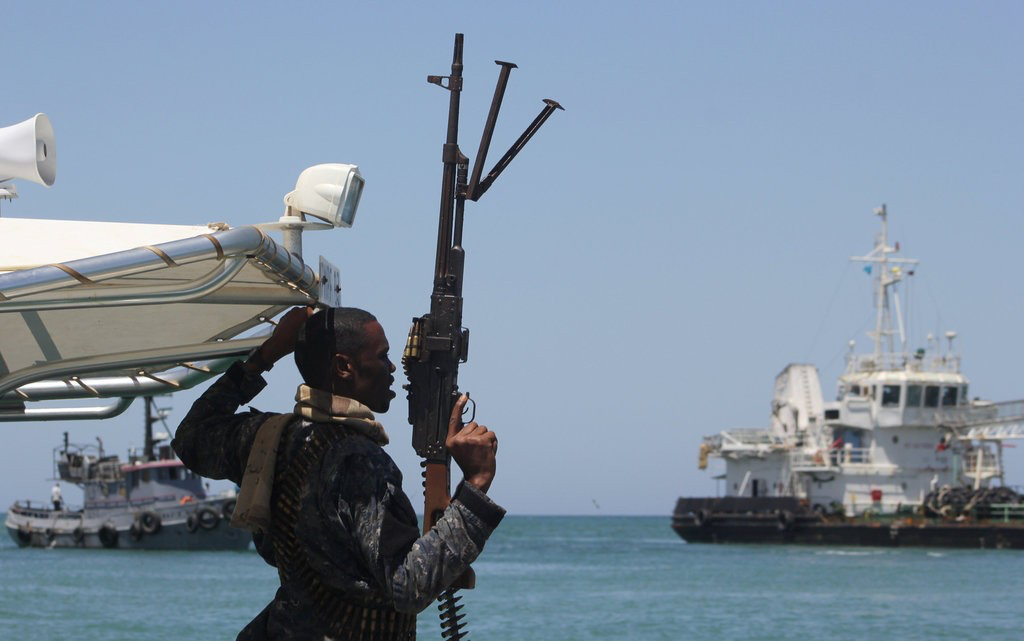
Credit: Abdiqani Hassan/Reuters
According to the State of Maritime Piracy report (2017), Asia had the largest piracy rate wth 125 instances. West Africa was second with 95 cases. This comprised of seafaring incidents of hijacking, kidnappings and armed robbery.
Researchers have claimed that there are a variety of factors that have led to a resurgence in piracy. These include political and social issues that present in these regions such as corruption, famine and even the impact that groups such as the Islamic state have had.
Solution
One option to tackle this issue has been surveillance through military intervention. This involves the policing the waters with a naval presence in order to prevent and step in if an attack was to take place. This both reduces the chances of a pirate attack to occur, as well increasing the risk for these pirates if they choose to hijack a marine vessel.
According to the Danish Institute of Military Studies, this offensive military strategy involves the use of air strikes which is a way of fighting these acts of terrorism in regions such as Somalia. These tactics are carried out with efficiency, as once these pirate ports and their leaders are located, military intervention take place.
Paul R. Williams argues that another strategy is to have armed security actually present on board ships, which can also prevent pirates from targeting these vessels.
However, although this may prevent the likelihood of an attack, it does not tackle the actual root of the issue. An effective solution to end maritime piracy would be a sustainable bottom up approach alongside the larger scale military action.
This could be done in a few different ways. One bottom up solution would be by finding the economic source that funds these pirate groups and directly cut them off. Another way would be by providing aid to these regions as regions like Somalia suffers from famine. This aid could be in the form of food and clean water. Finally, by setting up new forms of employment for these people, they would be less likely to join a pirate crew to earn a living and survive.


